
A trip from Gdynia or Sopot – what can we see in an hour?
In short
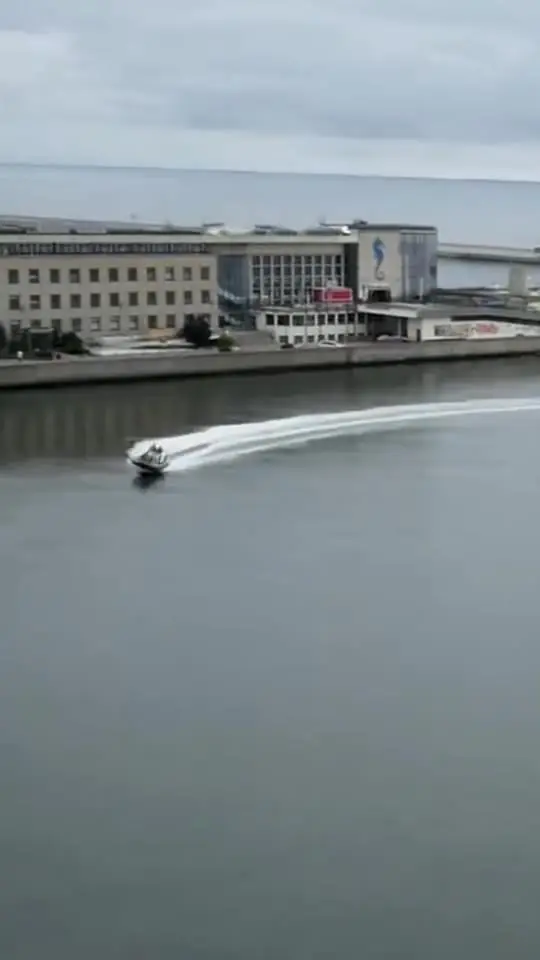
The one-hour RIB boat trip from Gdynia offered by RIBY.PL takes you to the Permanent Artillery Battery in Redłowo, Orłowo Cliff, the wooden pier in Orłowo and the mouth of the Swelina. Then we sail along the port – past the main entrance to the Port of Gdynia, Formoza and the fishing settlement – to the Babie Doły Torpedo Station and return to the marina.
Starting a trip from Gdynia, we can head in several directions. To choose the right one, you need to consider how much time you want to spend on such a boat trip. The next decision often depends on the weather, or more precisely on the state of the sea. What does the state of the sea mean? Essentially, the waves. These in turn depend above all on the specific character of the body of water. In our case, it is the Gulf of Gdańsk. And in the Gdynia area, the waves are largely related to the direction and strength of the wind.
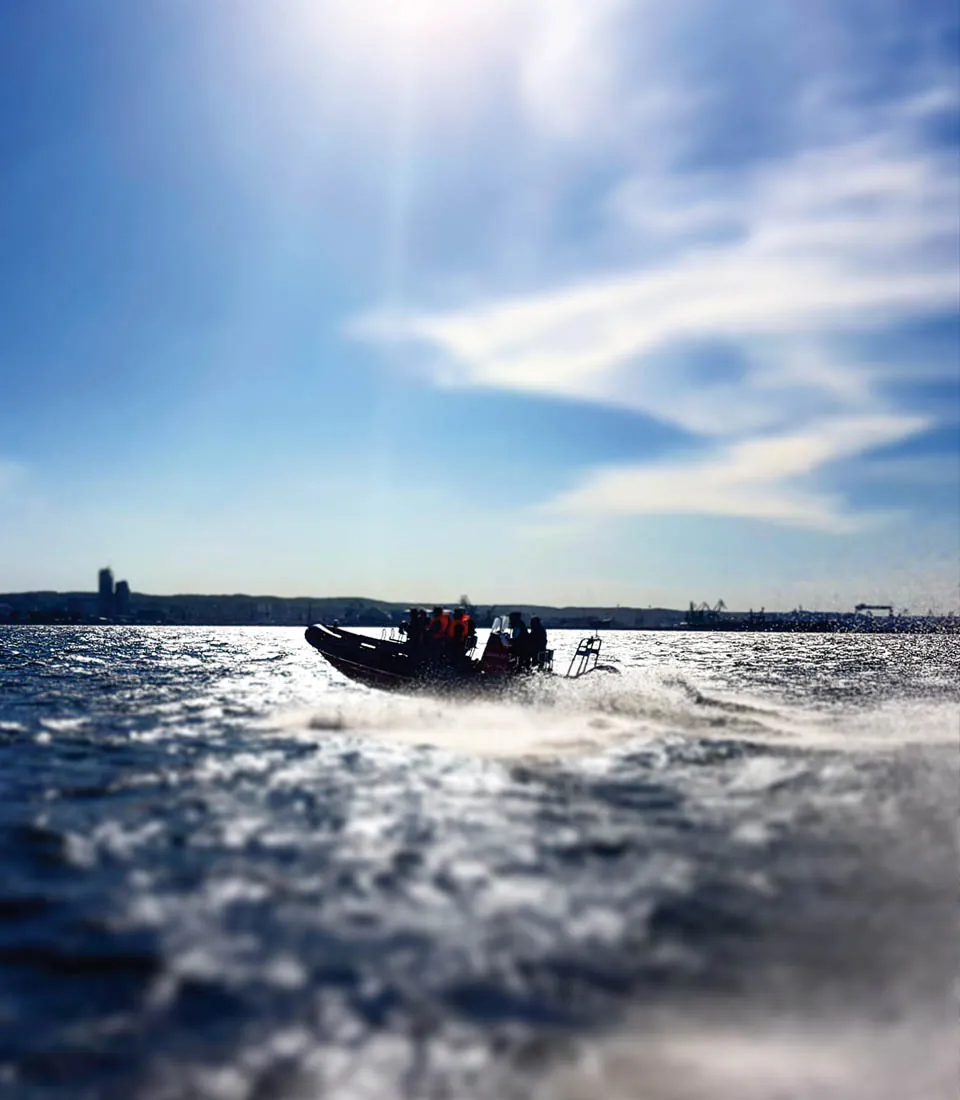
RIB boats are designed for trips in rough seas, but higher waves mean more adrenaline and therefore more fun, although they definitely reduce the comfort of the journey. How best to picture it? A flat sea is a calm horse ride at a walking pace. A high wave is definitely a gallop, where the rider puts all their weight on their legs, rises above the saddle and holds on with the strength of their legs. Definitely great fun.
But back to the point. For the purposes of this post, we assume that you have planned boat hire and ....

...we have an hour, no significant waves, sunshine, and for the trip from Gdynia by boat we invite the whole family.
1. BAS Gdynia Redłowo, i.e. the Permanent Artillery Battery. From the water you can see the remains of one of the three batteries. A few years ago it was pushed off the cliff into the water. The BAS project was created just after the end of the Second World War, so that the history of its beginning, in which the warship Schleswig Holstein played a significant role, would not be repeated.
2. The next stop is the postcard-famous Orłowo Cliff. A strip of land that keeps sliding into the sea and delights walkers every year.
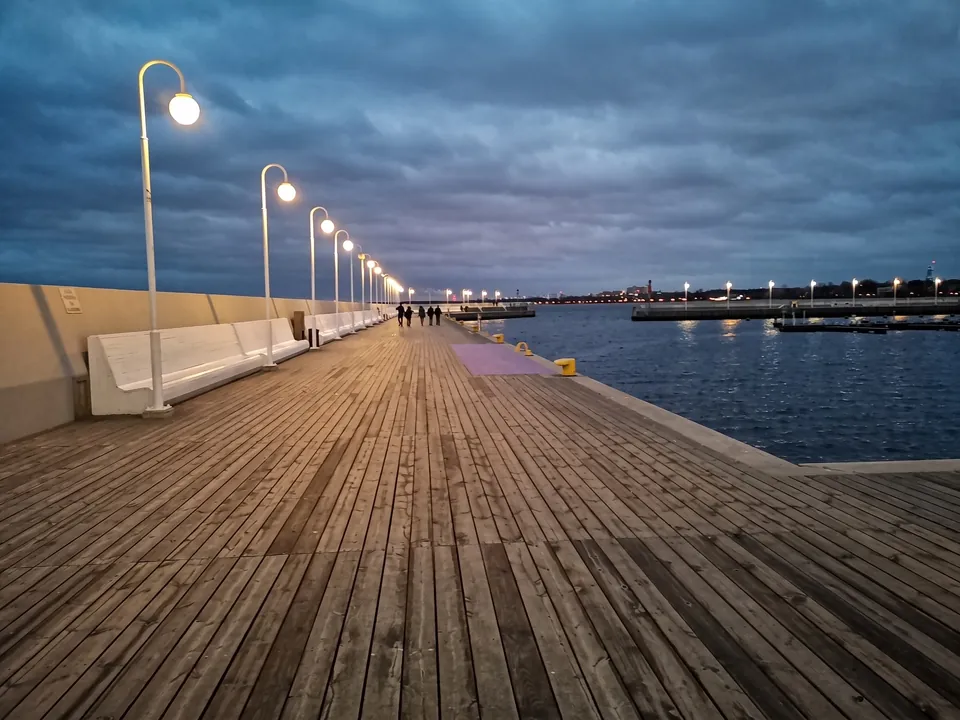
3. The wooden pier in Orłowo. One of the most beautiful districts of Gdynia. The only wooden pier in Gdynia. Smaller than the one in Sopot, but just as romantic. Right next to it is a small fishing settlement that is still in operation.
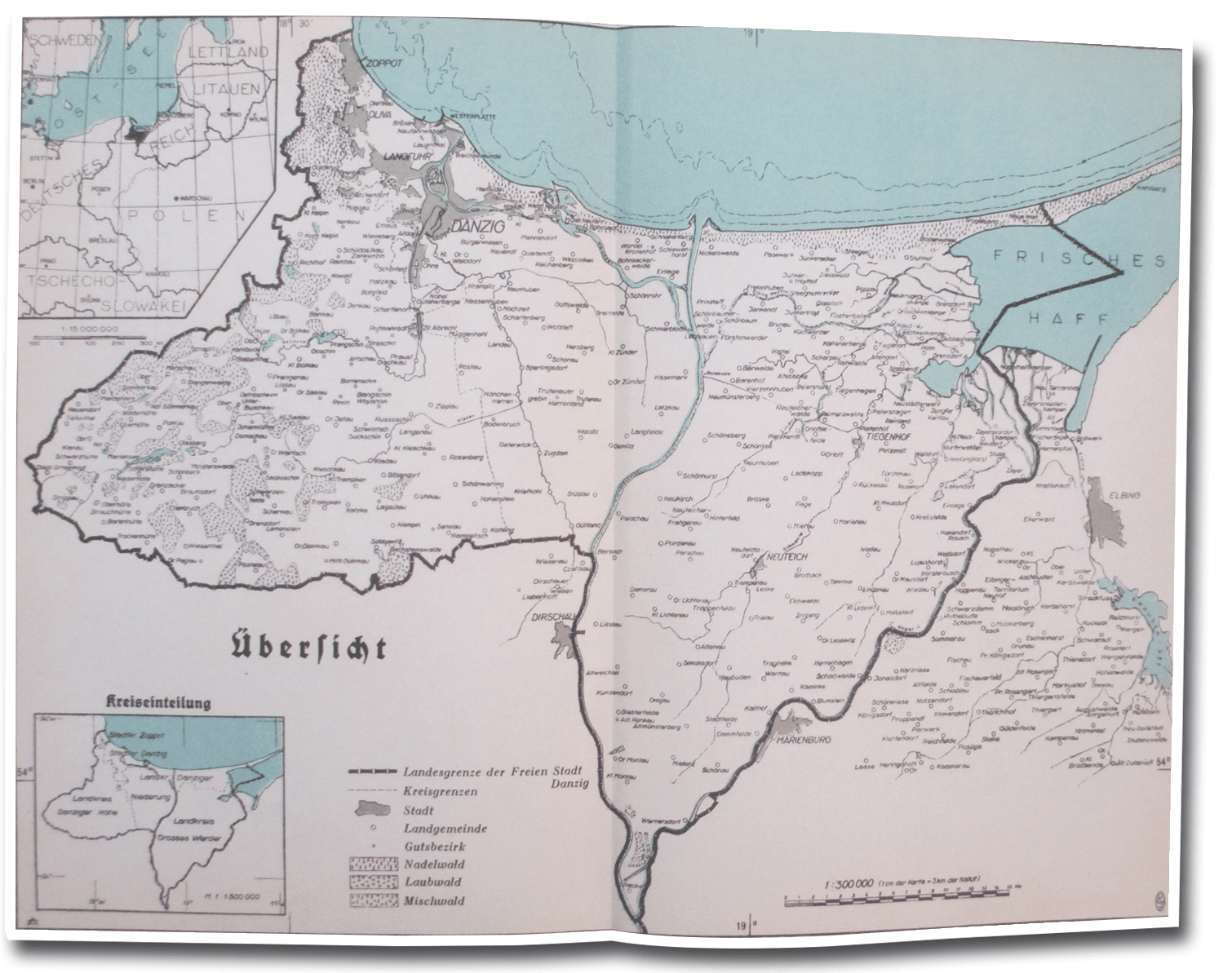
4. The mouth of a small river called Swelina into the Gulf of Gdańsk. It may not seem like much, but before the war it was the border between the Polish State and the Free City of Danzig, which remained under strong German influence. The Free City of Danzig had a direct influence on the fact that the first Polish, independent seaport was built in the small fishing village that Gdynia was, and the village turned into the city from the sea – Gdynia.
At this point we turn around and set course for the main entrance to the Port of Gdynia.
5. The main entrance to the Port of Gdynia has also witnessed some interesting stories.
During the Second World War, Gdynia was a very important research centre of the Kriegsmarine. During the evacuation, the Germans blew up the great battleship Gneisenau in the harbour entrance, hoping to paralyse the Gdynia port for a long time. And after the war, the transatlantic liners Batory and Stefan Batory departed from the Marine Station to the United States. From this spot you can see the building of the former Marine Station, today home to the modern Emigration Museum. Worth a visit.
6. Formoza - the Gdynia Oksywie Torpedo Station – a building constructed during the Second World War, today renovated and used by the Polish Navy.
7. A local curiosity. The fishing settlement, with a newly built promenade designed to protect the waterfront from the effects of storms. What is interesting, however, is the cable railway used to haul up fish, which, given the steepness of the slope, ought to be supervised by Polskie Koleje Linowe.
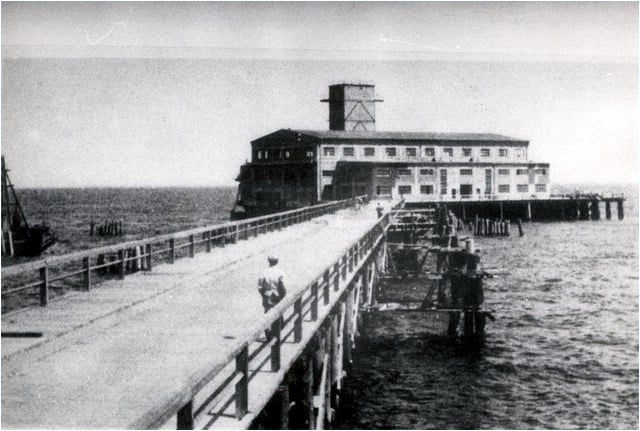
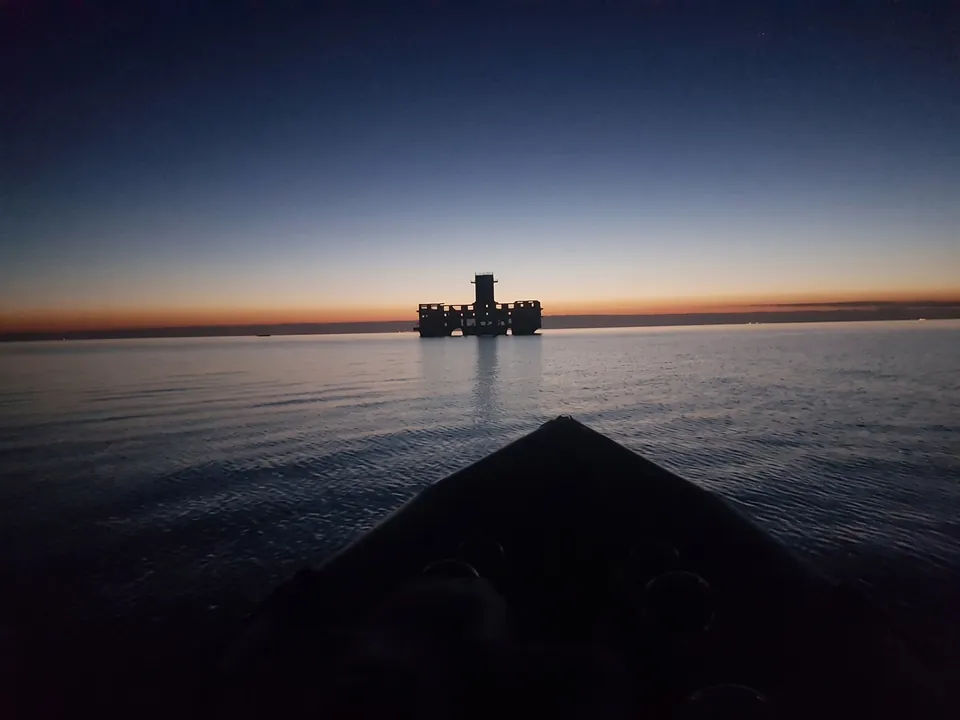
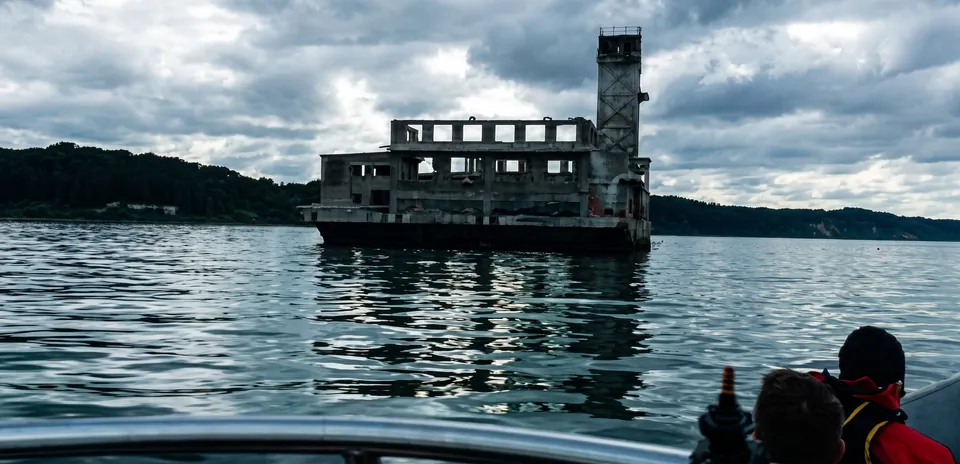
8. Babie Doły Torpedo Station – a huge structure standing far out in the sea which, like the previous building, is the result of German activity during the Second World War. An experimental range for water-to-water torpedoes intended for U2 submarines.
From here you can look across to the other side of the Gulf of Gdańsk, i.e. the Hel Peninsula. Directly opposite, you can see the summer residence of the President of the Republic of Poland in Jurata.
At the Gdynia Babie Doły Torpedo Station we end the boat trip and turn back towards the Marina in Gdynia. The return trip may take a dozen or so minutes, during which you can once again admire the port in all its glory.
The boat trip from Gdynia described above is just an example and a tried-and-tested suggestion. Each time, we tailor the route of the boat trip to the needs of the group.
On the page Trips on the Gulf of Gdańsk we present two trip routes: the green route takes about 2.5 hours and the red route about 2 hours.
We invite you to explore the Tri-City from the water. During the trip we reveal more interesting facts about our region :)





Frequently asked questions
Do waves get in the way of a RIB boat trip?
RIB boats are designed for trips in rough seas. Higher waves mean more adrenaline and fun, but reduce the comfort of the journey.
Can the route of a trip from Gdynia be changed?
Yes. The trip described is an example – we tailor the route to the needs of the group each time. At wycieczki.riby.pl there are also longer routes: green (approx. 2.5 h) and red (approx. 2 h).